

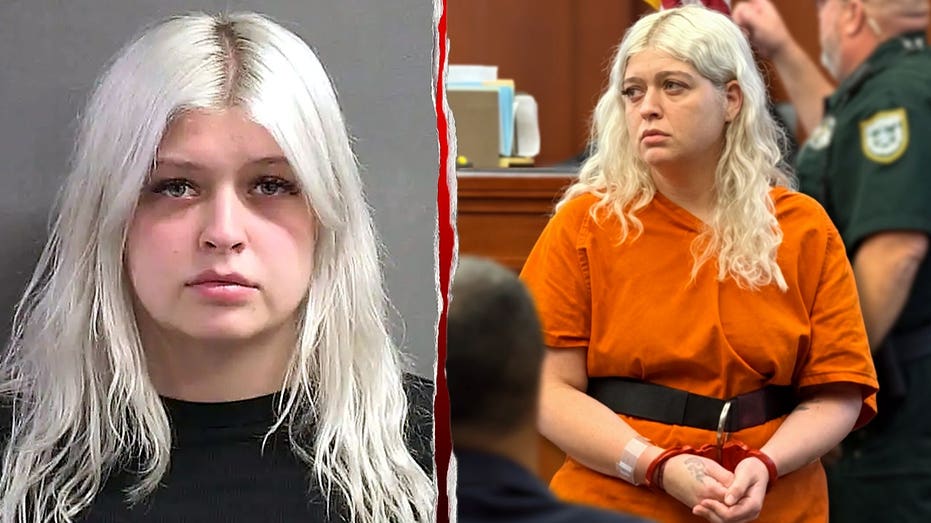
Lindsey Brooke Isaacs was asleep at home when police arrived and told the 23-year-old that her car had been involved in a crash that killed three people. She knew they had the wrong person. Her black Dodge Durango showed no obvious collision damage, and she had a receipt showing where she had been.
Still, the investigation eventually led to her being arrested and 13 days in jail. “My heart was in my stomach,” Lindsey told me on The CyberGuy Report Podcast at Cyberguy.com/podcast/. “I didn’t know what was going on.”
Months later, prosecutors dropped all eight felony charges against her and investigators arrested another woman in connection with the crash. Her case now raises a bigger question about how much weight investigators should give license plate camera data when a person’s freedom is on the line.
Missed CyberGuy LIVE? Watch the Protect Your Money replay
Our free CyberGuy LIVE class, Protect Your Money From Today’s Biggest Threats, has ended, but you can still watch the full replay and download our financial protection checklist. Kurt “CyberGuy” Knutsson walks you through five simple ways to help defend yourself against AI scams, fraud, identity theft and financial hacks. You’ll learn how to set up bank alerts, strengthen your account logins, protect your phone number, freeze your credit and help secure your retirement savings against unauthorized transfers. No technical experience is needed.
Get the free replay and checklist now at CyberGuyLive.com
LICENSE PLATE CAMERAS ARE TRACKING DRIVERS EVERYWHERE
The deadly crash happened on Oct. 4, 2025, along eastbound Interstate 4 near DeBary, Florida. Motorcyclist Joaquin Deno died. Flagler County Deputy Administrator Jorge Salinas and his wife, Nancy Salinas, also died. Witnesses reported that a Dodge Durango was involved.
Investigators found Lindsey’s black Dodge Durango through a Flock automated license plate reader. The camera recorded her vehicle traveling eastbound near the Seminole and Volusia county line at 9:51 p.m. That camera was about three miles west of the crash scene. The crash happened around 9:53 p.m. That timing became especially important later.
Lindsey’s attorney, Patrick McGeehan, said his team performed a time-distance analysis and concluded Lindsey was already beyond the crash location when the collision occurred. So the camera really did capture Lindsey’s vehicle. The problem came from what investigators concluded from that sighting. Lindsey put it more bluntly during our conversation. “They just picked up my car off a camera and called it the end of the day. We got her.”
The Flock camera hit was far from the only information investigators had. A 911 caller described a maroon Dodge Durango and provided part of its license plate number. Later, investigators also found red or maroon paint transfer on a Ford Focus involved in the crash.
Meanwhile, Lindsey drove a black Dodge Durango. A specialized Florida Highway Patrol team later inspected Lindsey’s vehicle and reported finding no damage suggesting it had been involved in a collision with another vehicle.
That finding lined up with something Lindsey said she had been telling investigators from the beginning. “Where is the damage on the vehicle?” she recalled asking police. “Because I’m standing right in front of it and I don’t see any damage.” Still, authorities impounded her SUV. Months passed.
On April 17, 2026, Lindsey got a call from her attorney. She had to surrender that day. “They are arresting you for this crime,” Lindsey recalled him telling her. She faced eight felony charges: three counts of vehicular homicide, three counts of leaving the scene of a crash involving death, leaving the scene involving serious bodily injury and reckless driving causing serious bodily injury. Lindsey spent 13 days in jail.
During our podcast conversation, she described spending her first several days in solitary confinement. She said she had a toilet, a sink and a metal sleeping slab covered by a thin mat. Her charges were so serious, she said, that jail officials initially kept her separated from other people.
Later, Lindsey was transferred to other sections of the jail. After her first bond hearing, she remained behind bars. “I was devastated, I was scared,” she told me. “I thought my life was over.”
HOW SURVEILLANCE TECH LED POLICE TO ACCUSE THE WRONG PERSON
A new investigation changes the case
The case finally began moving in a very different direction after prosecutors and a specialized Florida Highway Patrol team took another look. That team found no meaningful crash damage on Lindsey’s Durango. Investigators revisited witness information and followed evidence pointing toward another vehicle.
On May 22, the State Attorney’s Office formally declined to prosecute Lindsey on all eight charges. Authorities then arrested Alisa Lee Montalvo on charges connected to the crash. Prosecutors allege Montalvo was driving a maroon Dodge Durango. She faces nine charges, including three counts of vehicular homicide and tampering with physical evidence. She has not been convicted, and the charges remain allegations.
For Lindsey, the news brought enormous relief. “I felt like a new woman,” she told me. “I felt free.” Lindsey told me she later received an apology from the head of the Florida Highway Patrol. “It felt like a miracle,” she said. “Another miracle from God that I was hearing it in person, face to face.”
However, she also said the experience left lasting emotional and physical effects. “This took and is going to take maybe years to get better mentally, physically, emotionally,” Lindsey said. Lindsey has since filed a federal civil rights lawsuit against two Florida Highway Patrol troopers involved in the investigation, alleging false arrest, wrongful imprisonment and malicious prosecution. Those claims have not been proven in court.
We reached out to Flock Safety and the Florida Highway Patrol for comment. Flock Safety responded with the following statement:
“Flock cameras provide investigative leads; they do not identify perpetrators, determine guilt, or make arrest decisions. In fact, the complaint itself calls the Flock evidence ‘exculpatory, not inculpatory,’ meaning the evidence pointed away from Ms. Isaacs rather than implicating her: it accurately placed her vehicle three miles from the crash scene just two minutes before the crash. Characterizing her arrest as the result of Flock technology fundamentally misrepresents both the allegations and the role our technology played in this case.”
The Florida Highway Patrol did not respond to our request for comment.
What a Flock camera can record
Flock cameras are automated license plate readers, often called ALPRs. They capture images of passing vehicles and use software to identify license plates. Flock systems can also capture vehicle characteristics including make, model and color. Each camera sighting can create a record linking a vehicle with a particular place and time.
For police, that can become an extremely useful investigative tool. A stolen car can appear on a camera. A vehicle connected to a missing person case could produce a lead. However, Lindsey’s experience raises another question. What happens when investigators put too much confidence in one search result? We previously explored that concern after surveillance technology helped police accuse a Colorado woman of stealing a package. Her own phone location history eventually helped show where she had really been.
One of the most interesting moments in my conversation with Lindsey came when I asked whether she blamed the Flock technology or the way police interpreted its data. Her answer was clear. “I 100% think the second one you said, how police interpret the camera footage,” she told me. That gets to the heart of this story.
The Flock camera captured Lindsey’s vehicle traveling on I-4. The machine did what it was designed to do. Human judgment came next. Investigators had to decide what that sighting meant. They also had to weigh it against witness accounts, physical evidence and the condition of Lindsey’s car.
According to Lindsey’s federal complaint, the Flock hit three miles from the crash two minutes beforehand, ultimately helped her legal team argue that she was already beyond the crash location when the collision occurred. Technology can surface a lead. People still have to prove what that lead actually means.
The debate over these cameras has now taken a major turn in Florida. On Aug. 31, the Florida Department of Transportation revoked permits for license plate reader systems within rights-of-way on Florida’s state highway system.
FDOT cited the rapid growth of the systems along with reports of misuse and concerns involving data privacy and surveillance. Cameras covered by the order must be removed within 30 days. The agency also said it will stop issuing future permits for license plate readers within its jurisdiction.
However, that order does not eliminate every Flock camera in Florida. It applies to cameras within FDOT-controlled state highway rights of way. Local governments can take different approaches to cameras on city or county property. Several agencies have chosen to pull back further. Miami-Dade County, for example, announced that it would suspend its entire license plate reader program. Other Florida agencies plan to continue using cameras away from state highways.
Flock Safety has also announced significant changes to how its system operates. In August, the company announced that it was changing its recommended and default license plate data retention period from 30 days to seven days.
Flock also plans to require law enforcement customers to use its Audit Assistance tool by the end of 2026. The technology flags unusual search activity for review.
Case codes will also become mandatory for law enforcement searches by the end of the year. Flock says emergency searches can bypass that requirement, although those searches will be flagged for review. Those changes add oversight. Still, safeguards inside the software cannot determine whether an investigator has drawn the right conclusion from the information on the screen.
Most of us probably drive past license plate readers without noticing them. A single plate scan may seem harmless. After all, anyone standing beside the road can see your license plate.
A searchable network changes the equation. Instead of someone seeing your vehicle once, a network of cameras can record when that vehicle passed particular locations.
We have already reported on Flock license plate cameras appearing at some Home Depot and Lowe’s parking lots. We also reported on a Washington court ruling that found Flock license plate reader images can qualify as public records under that state’s Public Records Act.
Lindsey told me she knew Flock cameras existed before her ordeal. She simply had no idea how much could ride on the information they collected. “I just thought it was like a traffic camera,” she said. Today, her opinion has changed. “I feel very different about those cameras now.”
POWERFUL CRIME-FIGHTING SURVEILLANCE GROWTH SPURS LAWMAKERS TO ISSUE WARNING: ‘ORWELLIAN’
If police tell you that your vehicle appeared in a license plate reader search tied to a serious crime, your own records could become important.
Save receipts and toll records that can help establish where you were. If your phone already stores location history, preserve that information too. Avoid changing or deleting anything related to the period investigators are asking about.
Doorbell cameras and security systems often overwrite older recordings. If footage could show your vehicle at home or somewhere else, preserve a copy as soon as possible. The same goes for dashcam video.
If authorities claim your car was involved in a collision, take detailed pictures and video showing its condition. Photograph and record each side of the vehicle and keep the original files with their date information intact.
A serious criminal accusation can escalate quickly. An attorney can help preserve evidence and communicate with investigators. Legal counsel can also examine whether the available data actually supports what police believe happened.
I’m torn on Flock cameras. If somebody burglarizes my home, I want police to have technology that can help identify the vehicle that drove away. If investigators are trying to locate a missing person, a license plate reader could provide a valuable lead. But Lindsey’s story shows what can happen when a lead begins driving the investigation instead of helping investigators test what really happened. Her black Dodge Durango had no crash damage. Other evidence pointed toward a maroon Durango. The timing of the Flock hit ultimately helped her attorney argue that she could not have caused the crash. Yet she still spent 13 days in jail. As I told Lindsey during our conversation, “I can’t stand when technology is used in ways that it was never intended for.” That is where I land on this. The technology can be incredibly useful. The people using it still need to challenge what they think they know before someone loses their freedom. For more of Lindsey’s remarkable firsthand account, listen to or watch my full conversation with her on The CyberGuy Report Podcast at Cyberguy.com/podcast/.
After hearing what happened to Lindsey, would you want Flock cameras in your community, or has this case changed how you feel about police tracking license plates? Let us know by writing to us at Cyberguy.com
Sign up for my FREE CyberGuy Report
Copyright 2026 CyberGuy.com. All rights reserved.


